
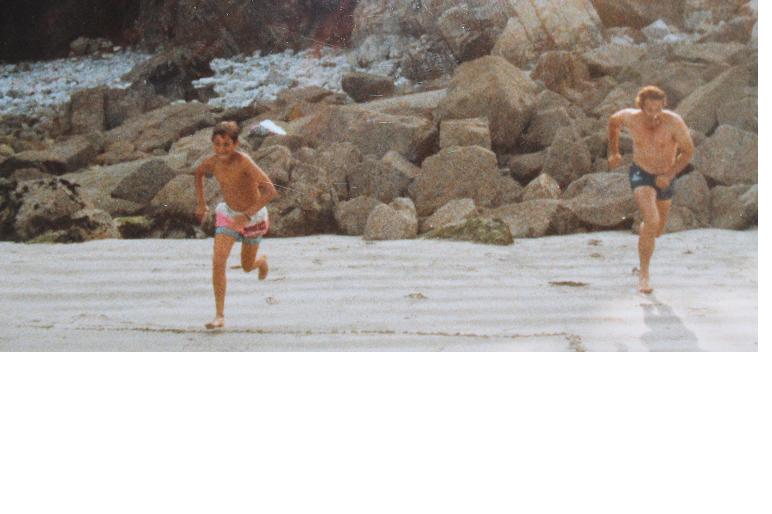
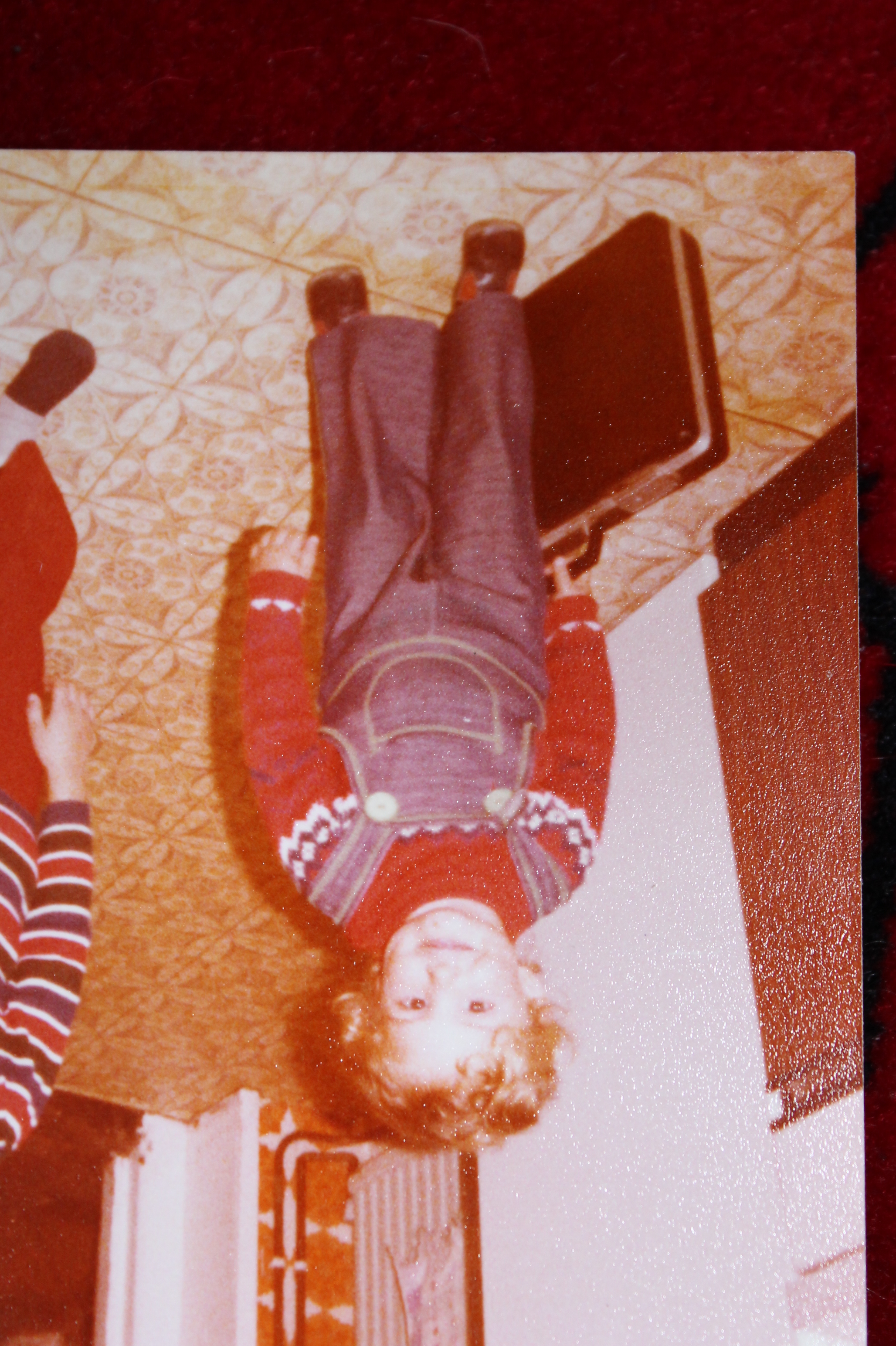
When I was seven, I told my mother I wanted a willy. It looked so much easier for my brother. On family walks, having to squat down in the grass, I would often pee all over myself, or down the back of my trousers.
Eventually, I developed a technique of taking off one trouser leg and the leg of one of my pants. Then, I stood with my feet very far apart, watching the glistening arc in its decent to the ground, feeling very satisfied and intrigued by the mechanics of the body.

In response to one of my recent posts, one of my readers commented about his own memoir-writing process. For those of us out there, writing about our lives, what are we to do when we discover truths we’re not all that keen on; if our instincts are to keep our secrets close and avoid judgment by others?
For me, this is a pain barrier I go through with every chapter of my book.
How’s the writing going? friends might ask me.
Right now, I’m getting through the discomfort, I say.
I used to try to write through it, but I’ve learnt that this just makes it all the more painful. Just as we sometimes get through life without words, we can make silent progress through our writing. This is in those moments that we need to understand, rather than write. I don’t necessarily mean that we have to be able to realize the meaning of something – we can tie ourselves up in knots, searching for explanations. What I think is more important is to be compassionately aware of how we feel.

At school, during break, my friends and I used to run all the way down the tarmac hill past the swimming pool, over the playground to the rugby pitch below, where there was a climbing frame. This phase lasted a whole summer. I would have been about nine.
We wanted to be down there as soon as possible, and would run straight out the door after lessons. It was only when I was halfway down the hill that I remembered I needed to pee. The thought of going all the way back to the toilet, and then having to come all the way back down the hill again, seemed too much of a waste. I would miss something. So, I kept going.
I would spend the next 20 minutes of break in ecstatic joy at the games we were playing, but always on the verge of wetting myself – especially when I was laughing. I might let out a tiny amount of pee into my pants. Sometimes that tiny amount would last a split second longer, and I would think I was going to wet myself entirely. This was a feeling of intense fear – often I would scream.
When I first began trying to write about these break times – building up to a specific occasion that I have never forgotten – there was a long period of discomfort that I had to ‘get through’.
I wasted a lot of time, trying to search for meanings; solutions.
Every time, I would conclude the problem was that no one would want to read this, or that people would think I was mad – they may even hate me.
Was that what I was afraid of? People hating me?
What if the only ‘hate’ to fear was my own?
Perhaps what I’m really afraid of, when I worry about what people think, are my own judgments?
By now, I was in a real knot. And I still couldn’t write the chapter.
I put my pencil down. I sat on the floor – nice and comfortable with cushions supporting me from all angles. I thought: what if this feeling need not have words? What if it’s simply ‘information’?
I sat there, acknowledging how uncomfortable I felt – restless, jumpy, breathless even. And then, I felt something else – something bigger, something beyond the discomfort. It was myself. So there I was – my whole self, holding this feeling of discomfort, until the two merged into each other and then I felt understanding, which was a soft, gentle sense of forgiveness.

This time, as we swing from the climbing frame, laughing, jumping, I know that I really do have to pee. There is a squat tree nearby and, beyond that, a corrugated iron shed with a tractor inside. I check to see that the shed is empty, and then I slip behind the tree.
My summer uniform is a knee length, pink, floral dress, which has a zip all the way up to the neck from just below the belly button so that it can be slipped on and off easily. I lift this up and hold it in a fist at my waist, along with my pants, which I’ve taken off completely. My black buckled up shoes and white ankle socks stand far apart on the ground.
I don’t recall in which order the next set of events come. Logically, the first thing to happen is for my friends to shout that someone is coming. But, in my memory, I don’t see their faces, or hear the scream. Do they call my name?
Either way, I stop, drop my dress and run around the tree. I’m not sure what’s happened: is someone there; have they seen me?
I’m creeping round the side of the tree. I don’t know if I am confused about why my friends aren’t helping me, or if this is something I think later, angry, needing to blame someone, other than myself.
As I creep round the tree, I hear my friends, screaming, or gasping. And then I come face to face with a boy in the sixth form. I know who he is. He’s one of the naughty boys, dark reddish hair, freckles on his face like splatters of mud that seem to have smudged, just perceptibly, as if blown by the wind.
Boo! he says.
There’s something very disgusting in that boo; so private that it can only be sexual in some way. The privacy is tender and shameful.
Something I did think, right then and there, but also later, days after, was that he had seen my face. It was the one thing I wished I could change: if I can’t change it all, at least make it that he doesn’t know who I am. Please, please, please.
What I dreaded was walking out of chapel the following day – because I would have to walk past him, and I had no idea what that would be like. This was the thing I feared the most and knew that I would have to do every day until he left the school, probably with the boys either side of him, sniggering too.

After I read that comment by my reader about truths and secrets and people’s opinions, I got on my bike. I had to cycle to the station to catch a train. As I went through the city, I thought about how it had been to write about the experience of being caught peeing. At each draft, until I was able to sympathise with my discomfort, writing almost gave a sensation of physical pain – such was the feeling of long-held shame. But that day, as I sat on my cushions, it was as if I finally said to myself: it’s okay.
I had waited years for that comfort.
I got to the station, padlocked my bike, and when I looked up I saw the police car. I walked past, acknowledging the strange quickening sensation inside me. When I got to the electric doors I thought: I mean, it’s not like I’m a criminal, for god’s sake.
Then I wondered, what do other people feel when they see a police car? Fear, worry, nervousness, anger, ignorance, denial – guilt?
None of these are all that wonderful to feel, but at least in sharing we have a chance of comfort, and by that I mean the comfort we can give to ourselves. The pain barrier is often nothing more than denial. Lower it down. It’s okay.

Those of you out there, writing about yourselves, remember that we’ve all felt uncomfortable. We haven’t all been caught with our skirts up around our waists, but by baring our secrets we can remind others of their own stupidities; and in that act of remembering, perhaps smiling – even laughing – both of us have a chance to feel forgiveness.
























 Gabriela Blandy - The sense of a journey