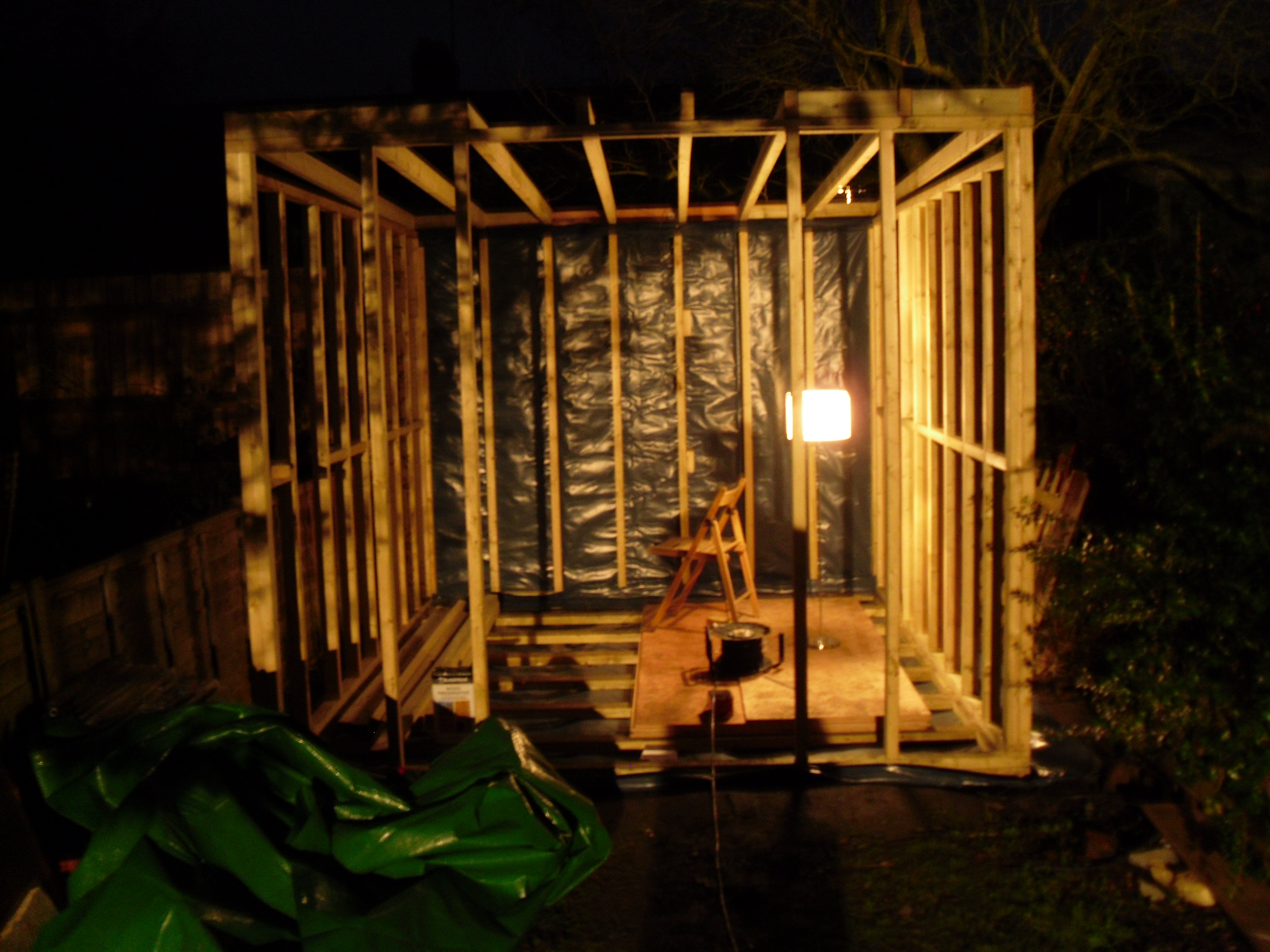
Dan and I are walking over the bridge to the bus stop. It’s not yet six o’clock, but the winter darkness has the river hidden. Only the streetlights can cut through the black, casting golden beams across the sodden streets. We’ve had non-stop rain for a few days now, though thankfully the clouds have wound down for the night. I can hear water running into drains beyond the hum of traffic.
Dan is telling me that a week ago he decided to stop trying to motivate himself to get his driver’s license.
I mean, look at it, he says, pointing to the backed-up traffic. Why would I want to get involved in that?
I say that when I took the train to Salisbury the previous weekend, I came through the barriers with my bicycle, wheeled out the entrance, swung my leg over the saddle and was suddenly cruising downhill. The sense of freedom and spontaneity hit me so profoundly that I started to sing. It’s worth not having a car for moments like this, I thought.
Dan and I wonder if these epiphanies came to us at the same time, whilst acknowledging that we are lucky to not have to rely on a car: no kids, no school runs; Dan’s studio is at the bottom of our garden, and the majority of my work is in London, which is a simple train ride away.

The other weekend, we were in Brighton with friends who stopped to talk to someone they recognised in the street – a young man with wiry hair and a melancholy look about him.
I’ve just handed over £450 pounds with nothing to show for it, he said.
Dan and I listened to his story. He is a gardener and has his own van for work. He’d been manoeuvring out of his space, early in the morning. The night before had brought a thick frost and his windscreen hadn’t fully thawed. Unable to see properly, he managed to scratch down the side of a car parked opposite – a Porsche.
Aren’t you insured? I asked.
It turned out he is, but that he’d agreed with the owner of the car to give him the money for repairs in cash – that way his premium wouldn’t go up.
Let me get this right, I said. You’re making monthly payments to your insurers, for the privilege of handing over cash to anyone whose car you damage?
He shrugged, and there was that melancholy look again.
I found this information perverse. What world is this that the insurance companies are escaping the expenses we’re paying them to cover?
I’d like to buy you lunch, Dan said, touching the gardener on his shoulder.
Perhaps we could send the receipt to your insurers, I joked when they brought us the bill.

When Dan and I cross the bridge and arrive at the bus stop, we notice that a section of road on the other side is flooded. Bollards have been placed around the oily lake, closing the way into town. We are going the other direction, but now we wonder if our bus is running.
I’m happy to wait – even when the scheduled time comes and goes. One thing I’ve learnt from taking regular public transport – especially in Winter – is: adopt all measures possible to ensure comfort. This means wrapping up warm so that delays are not exacerbated by the sharp sting of freezing bones.
Standing here in the damp and darkness, I am relaxed, looking forward to the evening ahead.
Thirty minutes later, we see our bus coming. Dan holds up his arm, and then begins to wave when the bus shows no sign of stopping. It splashes past and he swears. I notice how packed the carriage is – the windows filled with people. Each person could be a piece in a jigsaw puzzle, slotting together so that no space remains.
Dan and I start to laugh now about our earlier enthusiasm to a carless existence. Still, I cannot turn my back on public transport. For me, it offers challenges, the lure of the unpredictable, which are the exact buttons that turn on my creativity. If I decide to embrace all potential of delays, cancellations, crowded interiors, then I can float on an unknown current, see what shore I wash up on.
The other day, I noticed a woman, waiting on the platform for the train to London. She caught my eye because of the way she was holding a yogurt pot with such care, taking graceful spoonfuls, swallowing with such a look of concentration.
The train arrived into Paddington. I crossed the station, heading for the underground, squeezing past people on the escalator. I changed at Edware Road, waiting on the platform, unable to take the first train because it was too crowded. Now, I ascend at Euston Square, listening to the classical music they always play at this station. Ahead of me, there is a kerfuffle on the stairs. Someone has fallen. It is the woman from Oxford – the woman who was eating that yogurt – who not only wanted to get to Euston Square too, but managed to stay by my side, despite the line change, and the crowds. This is what I love about public transport – these miniature, miraculous narratives that play out.
In Mexico, there were various types of bus: the ones that Dan and I took from city to city – long journeys that lasted through the night, where we sat alongside families who seemed to be travelling with all they owned.
There were also the local buses.
When I moved to Mazatlan, I used to take a stumpy, rickety ride – sitting in an interior that smelt of boiled corn, salty hot skin and the thick, bitter-sweet stench of collective breath.
I loved these buses. There was a string that ran down the length of the carriage. One gentle yank and a bell would sound. Soon after, the bus would come to a halt – whether it was an official stop or not.
I was living in an apartment at the top of a dilapidated hotel in the old part of town. Further up the coast was the Zona Dorada – the Golden Zone. Here, the shore was lined with tall, highly-reflective hotels; restaurants with huge neon lights that seemed a strange contrast to the dusty streets a few blocks back from the sea.
Sleek, green buses spent the day, ferrying tourists in their clean, air-conditioned interiors. Thick glazing kept the sounds of the city out.
I’d been taking the local, rickety ride to and from the language school where I was studying. The route didn’t go past the hotel, but several streets back – so even though I could stop the bus exactly where I wanted, it was still a fifteen minute walk back to my apartment.
I’d noticed one of those green tourist buses, driving right past the hotel. So one night when I was up in the Zona Dorada, having a drink with a Canadian woman I’d met, I thought I’d spend the few extra dollars. It was nearly eleven o’clock and I didn’t feel like walking the fifteen minutes from where the local bus would drop me.
I wasn’t sure of the tourist bus route, so once I was inside I kept watchful at the window. It became clear that this bus only made scheduled stops, but that was all right as I’d noticed a bus stop very near the hotel.
We kept on. Gradually, the tourists got off and we left the thick of the city, driving down quiet streets that were lined with squat dwellings. No more streetlights. I didn’t recognise the area. I was squinting to see into the darkness, hoping for something I might be familiar with. I wasn’t nervous because I kept thinking that at some point the bus would swing round and bring me back to the sea front where my hotel was.
It stopped. I was the only one on board now.
After a moment, the driver turned and said something to me in Spanish.
No, I want to continue, I managed to tell him, carefully enunciating the verb endings.
Last stop, he said.
He must have noticed the expression on my face because, as I came down the aisle, he asked me if I knew this place.
I shook my head.
Where do you want to go? he said.
The Hotel Bel Mar, I told him, asking where we were.
We were at the port, he told me and I remembered. I’d been there once, catching sight of a huge cruise ship – tourists disembarking like cattle at the market. In the thick night I hadn’t recognised it. We were a few miles from the old part of town where I lived.
Where are you from? the driver asked.
Inglaterra.
You speak Spanish, he said.
I’m trying to learn, I told him.
He said he could understand me very well, and then he told me to sit down.
I’ll take you to the Hotel Bel Mar, he said and started up the engine.
He drove back through the quiet streets, until I saw shops fronts I knew – the matador bar I liked to drink at. There was the hotel.
He pulled up on the side of the road, explaining that the bus only passes here on the way out to the Zona Dorada. Coming back, the journey ends at the port. It made sense – a bus for the tourists, going between the port where they come in and the Zona Dorada.
But what about the old part of town? I asked him.
He shrugged and his expression seemed sad to me.
I thanked him then, but when I tried to offer him money he gently pushed my hand away.
Finally, a bus comes down the wet street, past the bollards, throwing up water. Dan and I climb on board. It’s been a wait of over an hour, but I am still warm. We journey out to the villages beyond the ring road, and finally reach our stop, walking from the bus shelter down the dark, narrow streets as the wind investigates us in a heavy-handed way. I don’t mind the walk, the silent hedgerows that I know lie in the darkness around me. I do find myself thinking of the door to door service I received in Mazatlan though. Certainly, a bus is at its best when it’s a taxi, but it seems you have to go to Mexico for the privilege, and speak enough Spanish to earn your fare.


























 Gabriela Blandy - The sense of a journey